Showing posts with label cleaning. Show all posts

Thursday, September 27, 2018

Pest Control: Ants

Is your home being overtaken by ants? Are you struggling to control them in a kid-safe, pet-safe, and/or eco-friendly way? That was me before I did a ton of digging and found safe ways to rid my homes of ants without risking my dog or any visiting kiddos.

My favorite commerical method is EcoSMART, but I've also heard good things about Aunt Fannie's and like that their products come in regular spray bottles. But if you prefer DIY like I do, read on for my tried & true methods.

1. Essential Oils for Deterrence
  • cinnamon
  • peppermint
  • eucalyptus
  • clove
  • lemon (or other citrus)
  • tea tree
Essential oils are a great way to keep ants away. I like to put a few drops on cotton balls and place throughout my house. We have literally watched ants actively avoid these cotton balls or do an about-face. I like to tuck these into my pantry and by entry points. You can also use essential oils in a home made ant spray.

2. Disrupt Their Scent Trail
  • lemon juice
  • bleach
  • vinegar
  • soap
Creating a diluted spray with any of the above (solo or in combination, inclusion of essential oils is a good idea too!), wil create a multi-purpose spray. Spray where you have seen ants to disrupt their scent trail, spray around your home or entry points to act as a deterrent, and the natural soap will actually kill ants as well if sprayed directly on them. Primarily I use these ingredients to clean & create a barrier that will disorient ants and keep them away.

3. Create a Barrier
  • flour
  • chalk (powdered, or just draw a line)
  • cornmeal
  • cream of wheat
  • coffee grounds
  • diatomaceous earth
  • ground cinnamon
  • ground clove
  • black pepper
The advantage to using powders to create a barrier are two-fold: these items are generally safe for ingestion by people & pets (maybe keep the coffee grounds away if kids/pets are a concern), and you can tell when it's time to redo your barrier. There are some additional benefits to a few of these items as well: cornmeal, cream of wheat, and DE actually kill ants.

4. Boiling Water
Boiling water is a pretty simple solution. It will kill the ants, but is about the most natural way to do so. Either mix boiling water with some soap to spray ants in your house, or pour boiling water into ant hills outside your home.

5. Borax
Borax will actually kill ants, and can be harmful to pets & children if ingested (just like any other salt in large quantities). If using Borax, I recommend doing so away from pets & children. You can mix Borax into sugar water (add liquid soap for some extra power), or mix it with honey & peanut butter.

6. Baking Soda & Powdered Sugar
As an alternative to Borax, which is harmful to kids & pets if ingested, you can mix baking soda & powdered sugar.

Thursday, June 28, 2018

Kitchen & Bath Scrub

Soft Scrub with Bleach used to be my go to for bathroom & kitchen cleaning. When we came across Bar Keeper's Friend, that took over for the kitchen. Neither is necessarily dangerous to my knowledge, but they also aren't very natural. I found a great scrub recipe on Aromahead, but really this recipe can be found all over the place by bloggers who make their own cleaners

This scrub is abrasive enough to bring some shine to your kitchen sink, lightly polish faucets, and scrub out your bath & toilet. It's also very customizeable, so you can use more or less baking soda to get the scrubbing power you need.

Kitchen & Bath Scrub
1 cup baking soda
1/4 cup liquid castille soap
1-2 Tbsp vinegar (optional)
30-40 drops essential oil

Mix the baking soda, castille soap, and vinegar together. It will form a rather thick paste (adjust to your preference/scrubbing power needs). Add essential oils and stir again to make sure they are fully dispersed.

Don't use any more than 2 Tbsp vinegar. Vinegar will cancel out both baking soda and castille soap. The fizzing action of vinegar and baking soda can help with some cleaning (particularly clogged drains), but when left to sit they are creating salt water. With the large amount of baking soda in this recipe, that is not much of  concern. Likewise, vinegar and castille soap can cancel each other out, leading to oil or "unsaponified" soap. With such a small amount of vinegar in this recipe, you are not risking these reactions.Alternately, you can leave the vinegar out as you lose the benefit unless you use this entire recipe right away.

Which Essential Oils?
Citrus oils, Tea Tree, and Peppermint are all great cleansing oils. Andrea Butje uses these in her recipe on Aromahead, but if you have her phone app you will see a different combination of oils listed. Really, you can just use whatever oils you enjoy the scent of. If you want the extra boost of cleansing power from antifungal, antiviral, and antimicrobial oils there are a lot of options or you can go with the tried and true citrus, tea tree, and peppermint.

Thursday, June 14, 2018

Dishwasher Detergent Revisited

As with my laundry soap, I've made some adjustments over time to my original dishwasher detergent recipe. Again I chose to remove the Borax because I found that it was leaving a film on my dishes. I also decided to add some castille soap for a little extra cleaning action.

DIY Dishwasher Soap - Redux

2 c washing soda
1/2 c kosher salt
1/2 c citric acid
1/4 c castille soap*, finely grated
(approximately 1/2 bar or 2-3 oz)
20 drops essential oil (optional)

Make sure to finely grate or chop your soap. I found that freezing it for 30-60 minutes and using a food processor to be very effective, but you could use a grater or other method. Mix all ingredients together and store in an air tight container. If using essential oils, make sure to mix in well before storing, so that the oils are evenly distributed and your soap does not clump.

My personal preference for essential oils in this application is citrus, such as lemon, grapefruit, or a blend. I currently am using a cleansing blend of lemon, clove, eucalyptus, and rosemary.


Something you will want to note is that the citric acid will attract moisture and may cause your soap to clump (or if you are really unlucky, as I have been in the past, fuse into 1 large block). This won't hurt anything, but it can be annoying and may make it harder for your soap to dissolve. Two good tips I've found are to leave your soap in a large, uncovered bowl for a couple days to let it dry out (make sure to stir it periodically to help break up any clumps), and to make a desiccant to keep in your container to absorb any excess moisture (for example powdered clay or dry rice in an empty tea bag, pantyhose, or sock).

To Make Tablets: Add about 1 cup of water to your dry mixture. Your mix will fizz up, just let it. Once the fizzing has stopped you will have a wet sand like texture. Scoop your detergent into molds (ice cube trays are good) and pack firmly. Let dry uncovered for at least 24 hours (or until completely dry). Store in an air-tight container.

Use 1 Tbsp (or 1 tablet) per load. For a simple rinse agent, use white vinegar. If that is not cutting it, you can always pour some vinegar into the bottom of your dishwasher and/or mist your dishes with vinegar while they dry. I also recommend making sure to clean your dishwasher itself if you are having build-up, sediment, or film issues (including cleaning that drain trap). I have also heard that using homemade dishwasher detergents with plastics can cause a film on your non-plastics.

*Make sure you grab castille soap, you do not want a soap that suds in this mixture!

Thursday, June 7, 2018

Laundry Detergent Revisted

It's been a while since I posted my original laundry soap recipe, and I've made some adjustments since then. Primarily, I chose to remove the Borax. Now, this isn't for health concerns, as the current debate on Borax may suggest, but because I found that Borax created a film or barrier on my clothing. Oil spots were not getting cleaned, and eventually over time (I'm talking 6-12 months or even years) some items had a noticeable film. They just didn't feel clean anymore, so I decided to revamp my recipe to remove the Borax. I also swapped out the Fels-Naptha for straight up castille soap. This is two fold. I didn't exactly like the scent that came with the Fels-Naptha, and it's not exactly a natural alternative (this soap includes extra chemicals). I also like knowing that, should I become that adventurous, I could make my own castille soap to use in this recipe.

DIY Laundry Soap - Redux

1 bar castille soap (5 oz)
3 c washing soda
1 c Oxyclean (or more washing soda)
1 c baking soda
30 drops essential oil (optional)

Make sure to finely grate or chop your soap. I found that freezing it for 30-60 minutes and using a food processor to be very effective, but you could use a grater or other method. Mix all ingredients together and store in an air tight container. If using essential oils, make sure to mix in well before storing, so that the oils are evenly distributed and your soap does not clump. My personal preference for essential oils are lavender and sandalwood, but choose whatever you enjoy the scent of or find relaxing (a great choice for bedding).

Use 1 Tbsp per load. This recipe is great for top load, front load, and HE washers (I've actually tested it in all 3). For a simple, green fabric softener use vinegar in the washer as you would liquid fabric softener, or add some wool balls to your dryer (either option can be scented using essential oils as well!). You could also make a dryer sheet by soaking a small cloth or rag in vinegar and throwing that into the dryer with your clothes.

Stripping your clothes
Wait what? Didn't removing the borax solve the problem of creating a film or layer on the material? Yes and no. Borax was the big culprit for me, but ultimately you are still using a soap. Soaps can leave films. Commercial detergents are just that, detergents (not soap). You may also just be dealing with hard water and all the sediment that comes with it. So, every now and then you may still find some build up on your clothing that you will want to remove.

Basically, you'll soak your clean clothes in hot water with a stripping solution. You can buy one or make your own. Most DIY stripping solutions are equal parts washing soda and borax. Some include (or simply just are) dish washing soap like the blue Dawn. Soak your clothes 45-60 minutes, stirring a few times. Drain and squeeze out excess water. Run your clothes through a water only wash cycle to remove any remaining solution, dirt, and oils.

Thursday, May 31, 2018

The Debate on Borax

I always do a good bit of research before deciding on a DIY to trying or making my own recipes. This has included looking into Borax, as I've seen bloggers who use it without question and others who say it is an unsafe material. Crunchy Betty and Wellness Mama do a great job of collecting the arguments for both sides, but I encourage you to do your own digging as well.

The Argument Against Borax
Borax has been classified by multiple organizations as concerning. EWG ranks it as moderately hazardous. The FDA banned it as a food additive, and ECA flagged it as a high concern.

Some physiological concerns are also noted. It can be a skin irritant, and some individuals have reported chemical burns. In some studies it was shown to cause lung irritation. Ingestion of borax can cause stomach pain and sickness. Boric acid is linked to hormone disruption (males) or fertility/pregnancy issues (females, primarily animals).

Use of borax in soil has also caused crop problems. It is used in insecticides and pesticides.

The Argument for Borax
Ok, well, this is less an argument for Borax, and more of a de-bunking of the arguments against it...

Borax is a salt, not an acid. Borax (sodium tetraborate or sodium borate) is a naturally occurring mineral salt. Boric acid (hydrogen borate) is the result of borax reacting with another acid. In some places these compounds occur together (such as volcanic areas or in seawater), but the borax we are buying at the store for our DIY projects is a salt that can be found naturally in the ground.

Borax is ranked the same as baking soda or salt when it comes to MSDS data, and NIH does not really indicate it as concerning unless ingested in large quantities (just like table salt). Indigestion or skin irritation all depend on the amount of a substance used and the individual person, but that does not inherently make a substance poisonous. Also, the non-topical physiological symptoms are related to ingesting large amounts of borax, which again you could have the same issues ingesting large amounts of baking soda or table salt.

Boron (the element in borax) is actually necessary to life, in small amounts. It is a trace mineral that benefits normal growth and a healthy body by helping to strengthen cell walls. Boron is also beneficial to crop soil (boron, not boron salt or borax). However, boron has been show to cause issues for arthropods, making it a good candidate for insecticides. Boric acid is the chemical you will find in insecticides or pesticides, not borax.

Conclusion?
Honestly, it's up to you. Make your own informed decision. Personally, I used Borax in laundry soap and dishwasher detergent for years, and my only complaint was about long-term performance. Over time, I noticed that my clothes and dishes appeared to get a film. In laundry detergent this can be associated with the soap as well, but some of my research suggested borax could also be a culprit.

If you choose to remove Borax from your repertoire, don't worry about having to find all new recipes. You can very easily replace Borax with washing soda in any cleaning product recipe and have good results. This won't make your whites whiter, but it should help if you are having issues getting things clean and removing that film.

Thursday, September 7, 2017

DIY Disinfectant Wipes

As part of my move to green living, I am trying to get away from disposable items. For example, we have a basket of rags and washcloths that we use instead of napkins and paper towels. However, sometimes you just need something with a little more cleaning power. Instead of picking up those Clorox or Lysol wipes, I decided to take a stab at making my own. These work great, and once you use up the container, wash the rags and make a new solution!

DIY Disinfectant Wipes

6 flour sack towels, cut down into quarters
4 c distilled water
1 c vinegar
1 c alcohol
20 drops essential oils (optional)

If you do not have distilled water on hand, just boil 4 cups and allow it to cool. The essential oils are not required, but they will improve the disinfecting power of your solution. My default is 5 drops each of lemon, peppermint, tea tree, and rosemary. All 4 of these have antibacterial properties, but you could use any oils of your choice that have disinfecting properties, or that you enjoy the scent of.

Stuff your 24 cloth pieces into an air tight jar. Combine all your liquid ingredients, and pour over the towels. Allow the solution to soak into the towels. Keep your container well-sealed to keep the cloths damp in between uses.

For a neat dispensing feature similar to the commercial wipes or tissues, lay out your cloths in a line with the ends slightly overlapping. Make sure you overlap the same way with each piece (for example, always set the next piece to the left and on top). You will now have a makeshift strip that you should fold in half lengthwise. Stuff this strip into your container, starting with the sole cloth that was not tucked into another (for example, the right most piece). Now when you pull out your cloths, the next one will be tucked inside and pop up for easy grabbing next time.

Grab a towel as needed to wipe down counter tops and more. Do note, you need to leave the surface wet for at least 10 minutes in order for the solution to truly disinfect. After 10 minutes you can air dry or wipe up (for a streak-free finish).


I keep my wipes on the counter next to my sink, along with my basket of dry rags/napkins and homemade dishwasher detergent. What I love about all of this, is that I can just toss everything into a hamper and wash it all once full. I keep a hamper under my counter for used wipes, rags/napkins, and towels. It's convenient for everyone, saves some money, and is generally more eco-friendly (minus the laundry, but I can get by with washing all of this every 2-4 weeks, depending on how active we've been--we are only 3 adults though, so if you have little ones, you can probably expect to do the wash more frequently).

Thursday, August 31, 2017

Homemade Laundry & Dishwasher Soap

A good friend of mine has been making her own laundry soap for years, and she always spoils me with a batch. Recently she hosted a green cleaning seminar with Clean Mama herself. Feeling revitalized, and having won her Simply Clean book in a raffle, I went home and set about getting supplies to make my own cleaners! Since both the laundry & dishwasher soap contain similar ingredients, I started with a batch of each.

DIY Laundry Soap

1 bar Fels-Naptha soap (or castille soap)*
2 c borax
1 c washing soda
1 c Oxyclean (or more washing soda)
1 c baking soda
30 drops essential oil (optional)

Make sure to finely grate or chop your soap. I found that freezing it for 30-60 minutes and using a food processor to be very effective, but you could use a grater or other method. Mix all ingredients together and store in an air tight container. If using essential oils, make sure to mix in well before storing, so that the oils are evenly distributed and your soap does not clump. My personal preference for essential oils are lavender and sandalwood, but choose whatever you enjoy the scent of or find relaxing (a great choice for bedding).

Use 1 Tbsp per load. This recipe is great for top load, front load, and HE washers (I've actually tested it in all 3). For a simple, green fabric softener use vinegar in the washer as you would liquid fabric softener, or add some wool balls to your dryer (either option can be scented using essential oils as well!)

*If you are looking to create a vegan soap, be careful which bar you choose. Both Fels-Naptha and Zote use tallow, but castille bars by definition are 100% vegetable oil (typically olive oil). Some verified vegan brands of castille soap are Dr. Bronner, Kirk's, and Mrs. Meyer's. All other ingredients are mineral-based, but you may want to dig into which brands are cruelty-free.


DIY Dishwasher Soap

1 c borax (or baking soda)
1 c washing soda
1/2 c kosher salt
1/2 c citric acid
20 drops essential oil (optional)

Mix all ingredients together and store in an air tight container. If using essential oils, make sure to mix in well before storing, so that the oils are evenly distributed and your soap does not clump. My personal preference for essential oils in this application is citrus, such as lemon, grapefruit, or a blend. I currently am using a cleansing blend of lemon, clove, eucalyptus, and rosemary.

I've also seen recipes floating around that add castille soap. If you are concerned about the lack of soap vs cleaning agent, feel free to add about 1/4 cup finely grated castille soap (sorry, I'm not sure how that translates into bars as I don't add it myself). Make sure you grab castille soap, you do not want a soap that suds in this mixture!
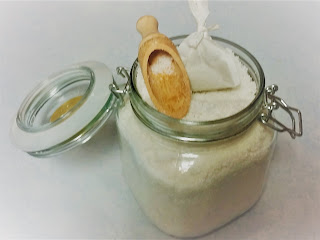
Something you will want to note is that the citric acid will attract moisture and may cause your soap to clump (or if you are really unlucky, fuse into 1 large block). This won't hurt anything, but it can be annoying and may make it harder for your soap to dissolve. Two good tips I've found are to leave your soap in a large, uncovered bowl for a couple days to let it dry out (make sure to stir it periodically to help break up any clumps), and to make a desiccant to keep in your container to absorb any excess moisture (for example powdered clay or dry rice in an empty tea bag, pantyhose, or sock).

Use 1 Tbsp per load. For a simple rinse agent, use white vinegar.


Now, there are some arguments against using Borax. I'm still working my way through the data, but as yet have not come across concrete examples of Borax actually being harmful (just some arguments that it could be). I encourage you to do your own digging as well. Crunchy Betty does a great job of collecting the arguments for both sides. That being said, I am looking into alternate solutions out of curiosity. In the meantime, I've been using laundry soap with Borax for years and have no complaints.